The SpeakWisely blog: IELTS speaking and spoken English, explained.
Practical guides to the IELTS speaking test and to speaking English with confidence: how the test works, what examiners listen for, and routines you can practise out loud today.
For Indian learners
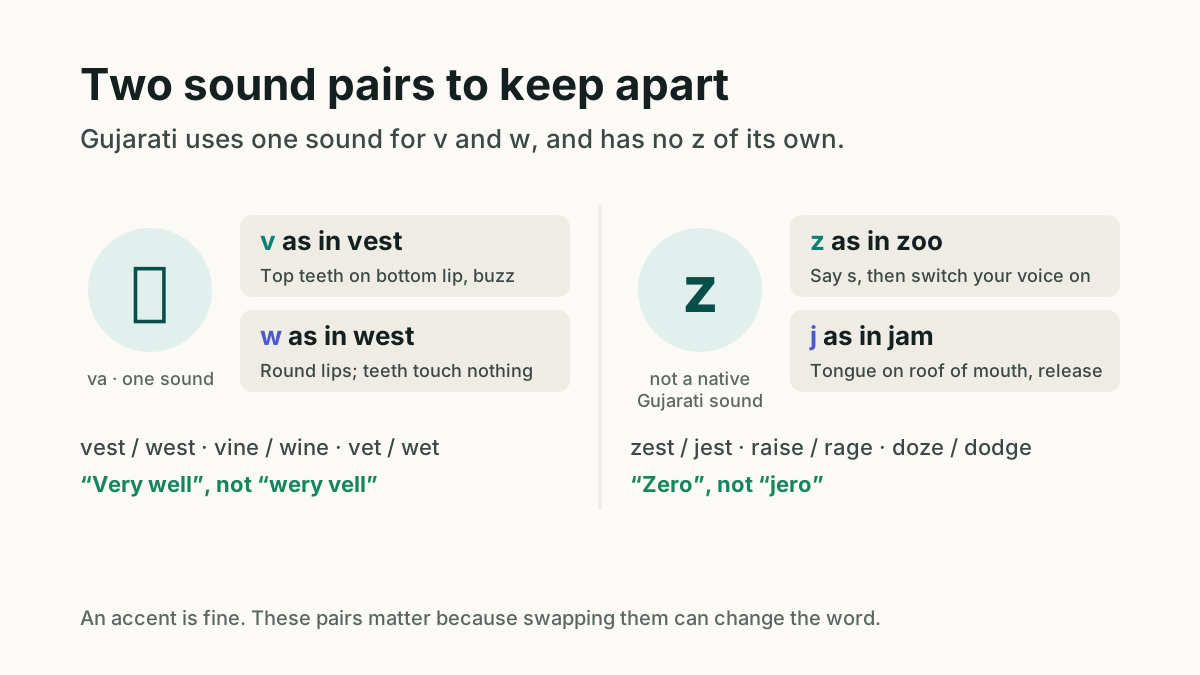
Common English mistakes Gujarati speakers make, and how to fix them
Verb at the end, one "thi" for since and for, one વ for v and w, no z of its own. Ten patterns Gujarati brings into English, and a drill for each.
· 10 min read
For Indian learners
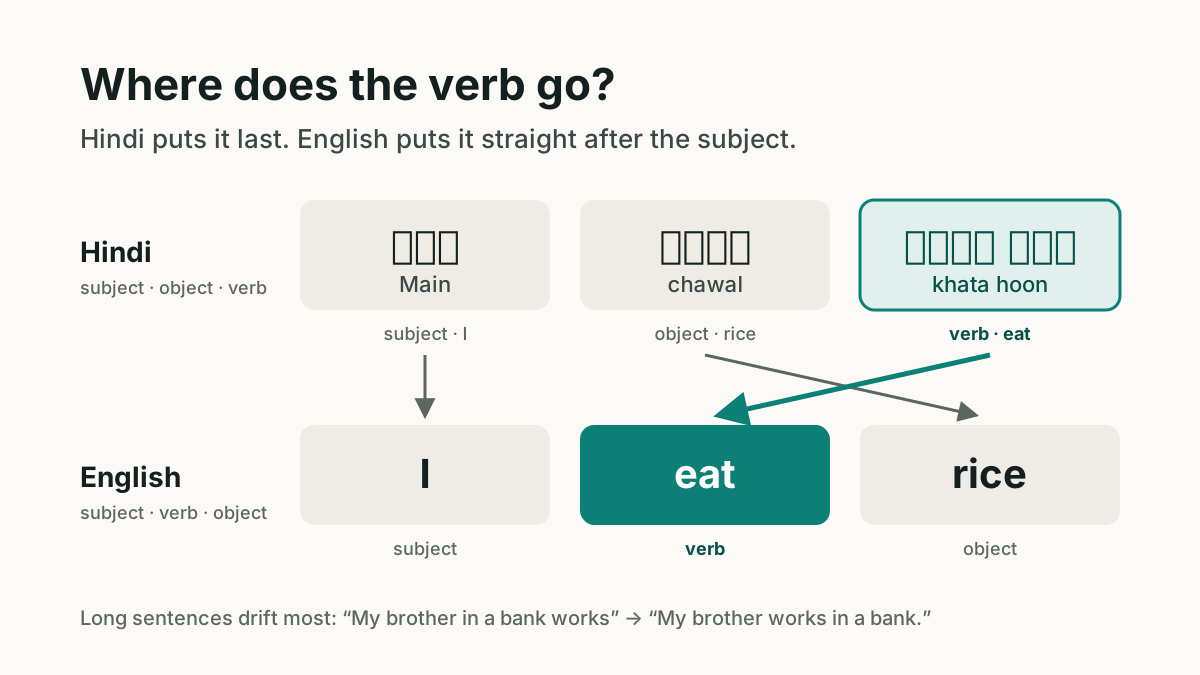
Common English mistakes Hindi speakers make, and how to fix them
Verb at the end, no "a" or "the", one "se" for since and for, one व for v and w. Ten patterns Hindi brings into English, and a drill for each.
· 9 min read
IELTS speaking
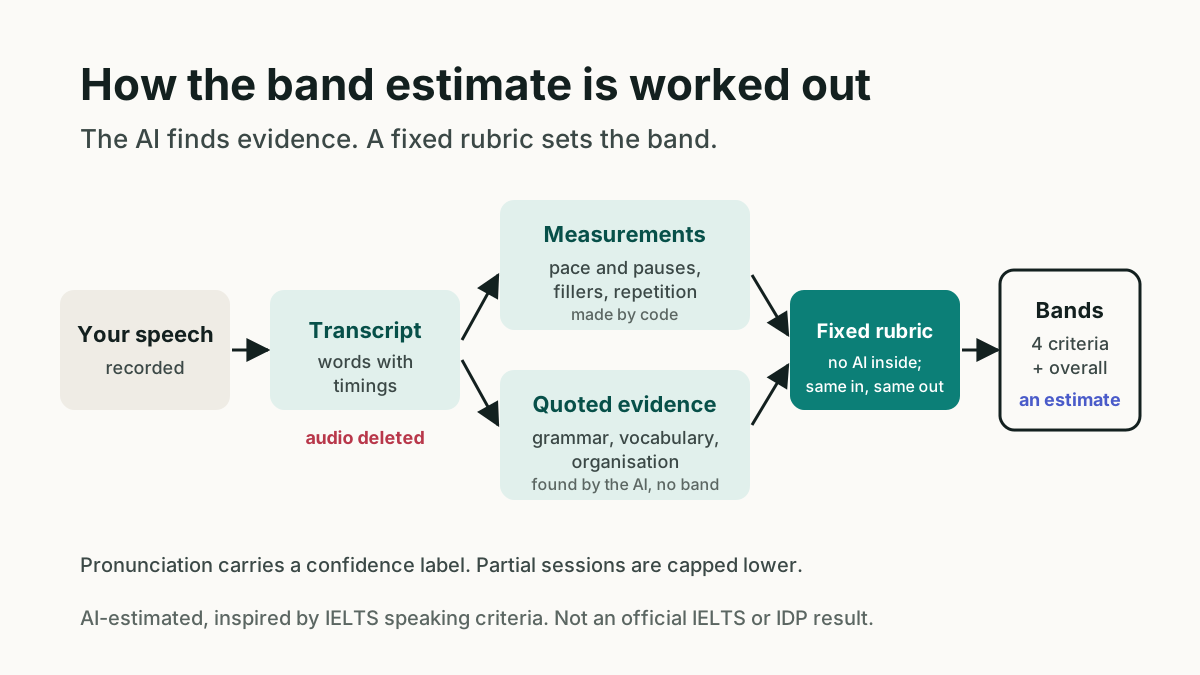
How SpeakWisely estimates your IELTS Speaking band (and its limits)
Your speech is measured, the AI finds quoted evidence, and a fixed rubric with no AI in it sets the band. Here is every step, and what an estimate cannot tell you.
· 8 min read
Spoken English
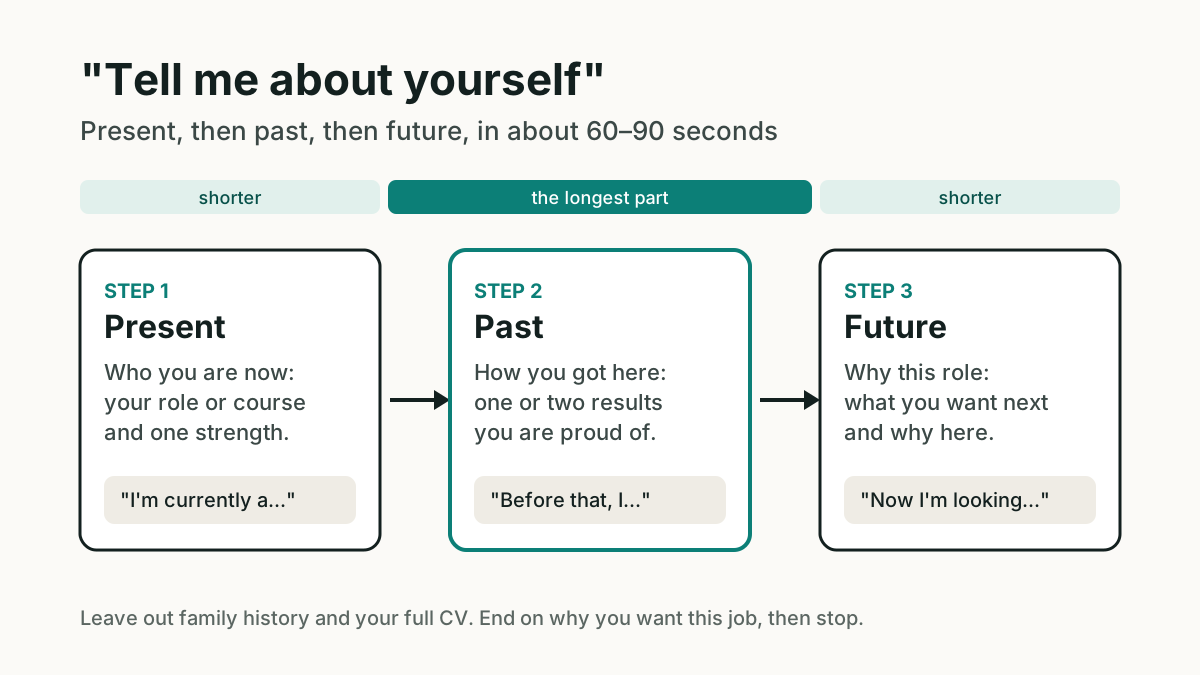
How to answer "Tell me about yourself" in an English interview
Present, past, future, in about a minute. A structure for the first interview question, three sample answers, and the phrases that weaken an answer.
· 7 min read
Spoken English
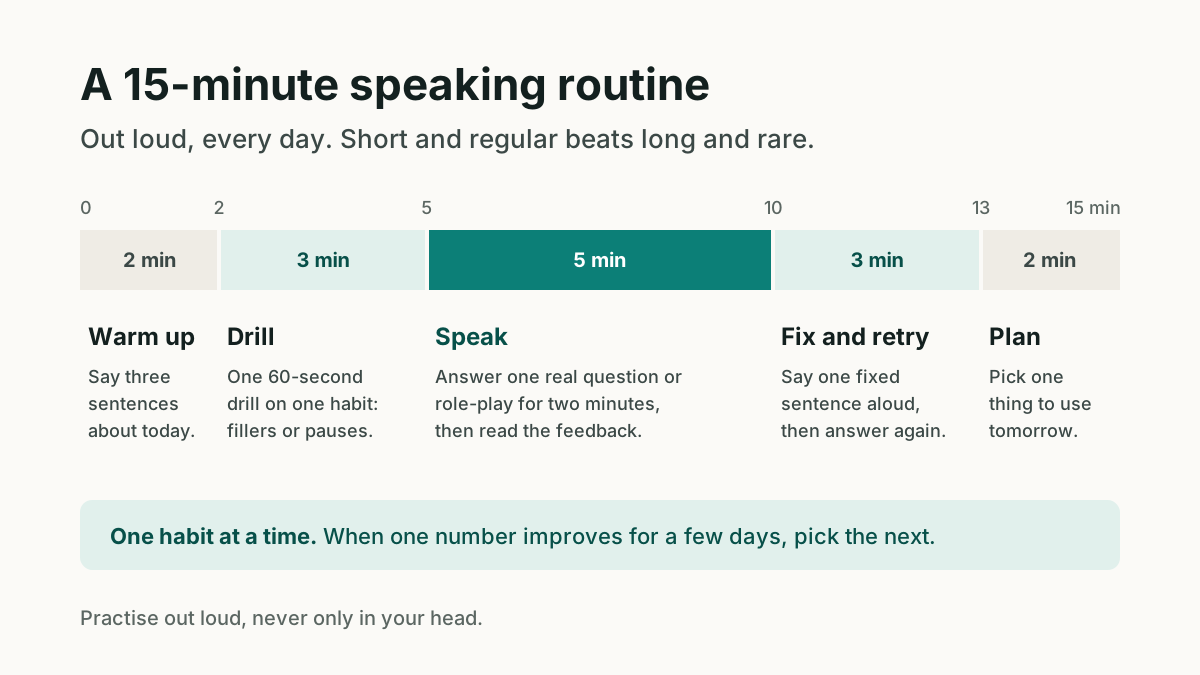
How to learn to speak English with AI: what AI feedback can and can't tell you
AI is a patient practice partner that can measure your pauses and quote your mistakes. It cannot give you an official score or replace real conversations. Here is how to use it well.
· 7 min read
Spoken English
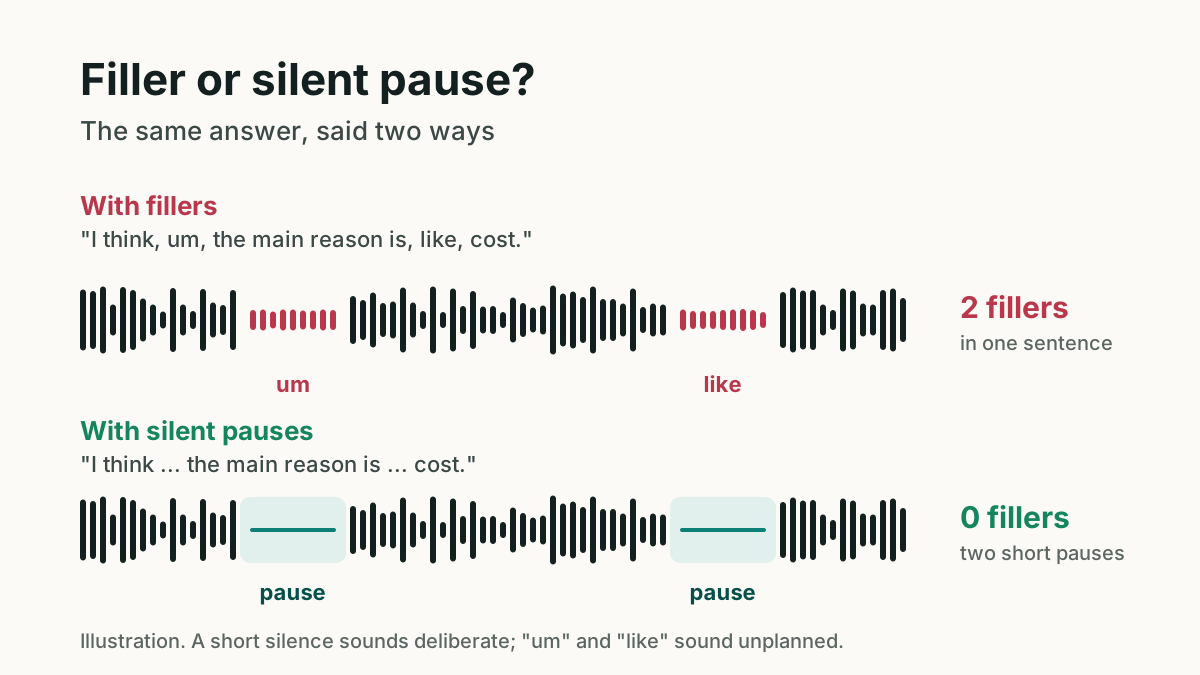
How to stop saying "um" and "like": a fluency practice routine
Fillers are the sound of planning out loud. Swap them for short silent pauses, keep a few thinking phrases ready, and track your fillers per minute for a week.
· 7 min read
IELTS speaking
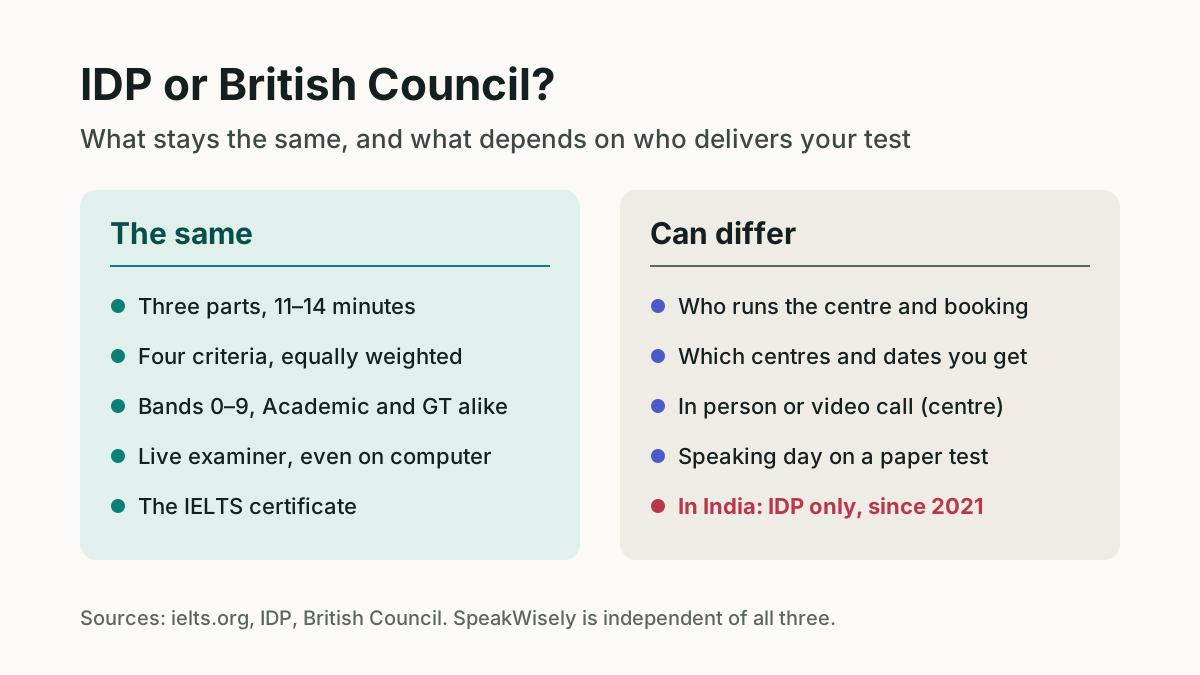
IDP vs British Council IELTS Speaking: what's the same and what's different
The Speaking test, its marking and the certificate are identical whoever delivers IELTS. What changes is who runs the centre, and in India that has been IDP since 2021.
· 8 min read
IELTS speaking
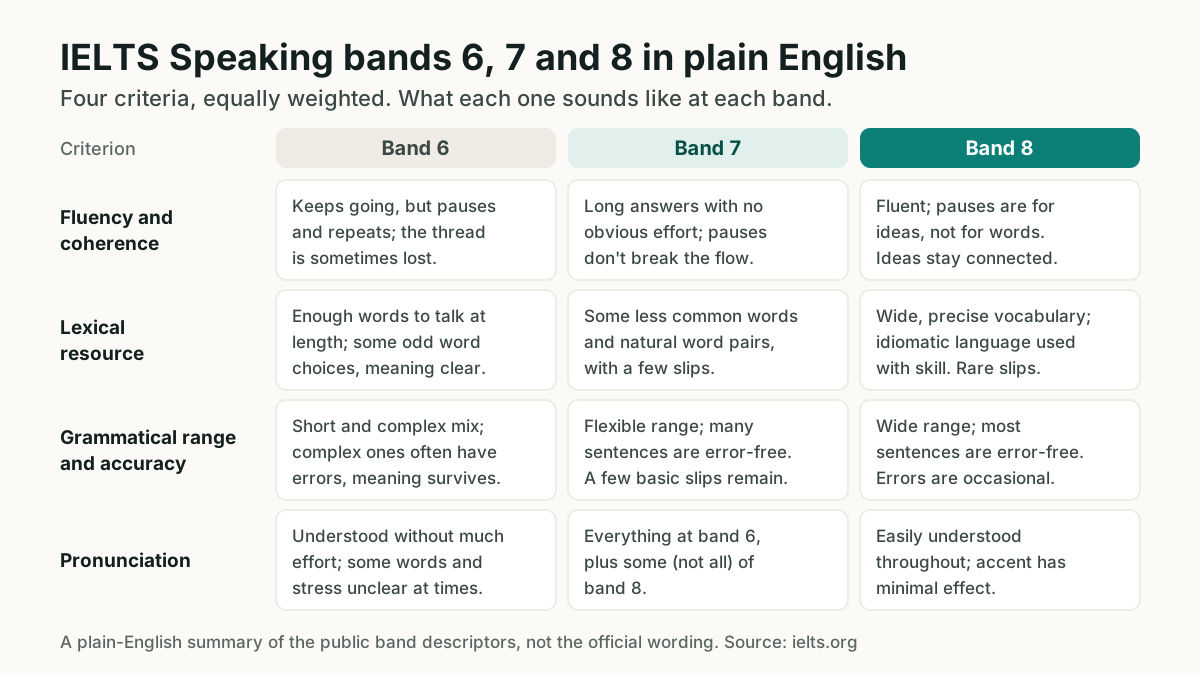
IELTS Speaking band descriptors in plain English: what band 6, 7 and 8 actually sound like
Fluency, vocabulary, grammar and pronunciation at bands 6, 7 and 8, in everyday words, with example answers that make the difference easy to hear.
· 9 min read
IELTS speaking
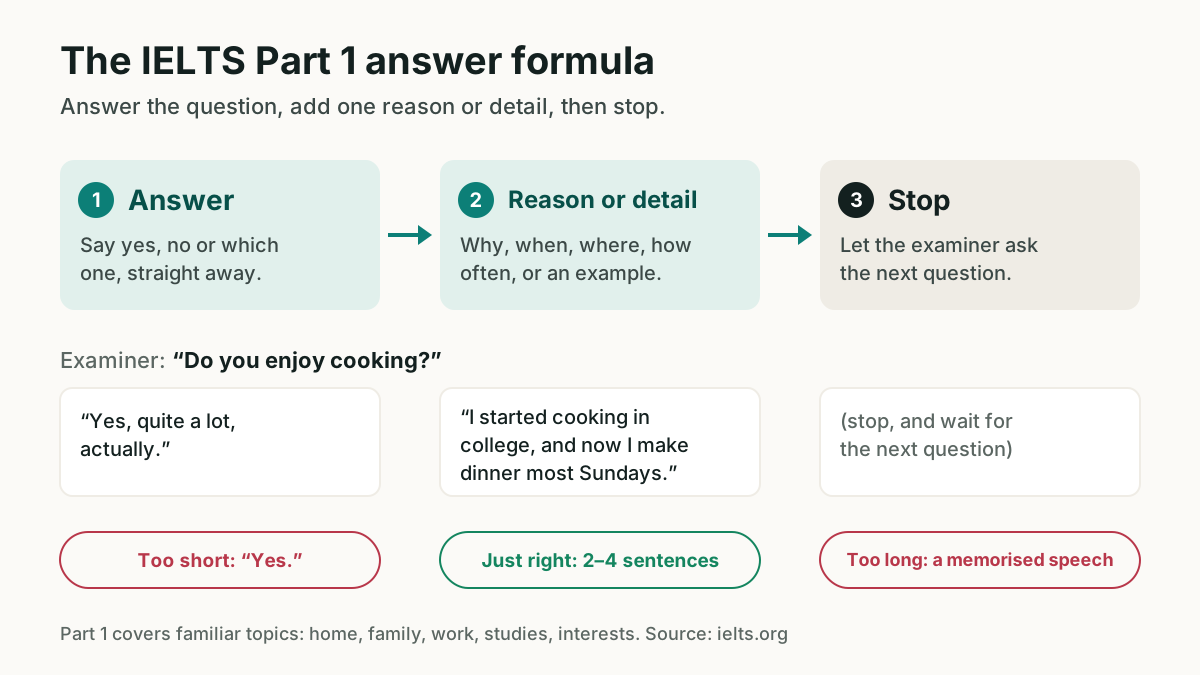
IELTS Speaking Part 1: common questions with natural sample answers
Typical Part 1 questions on familiar topics, natural two-to-four-sentence answers, and the simple formula that keeps every answer the right length.
· 7 min read
IELTS speaking
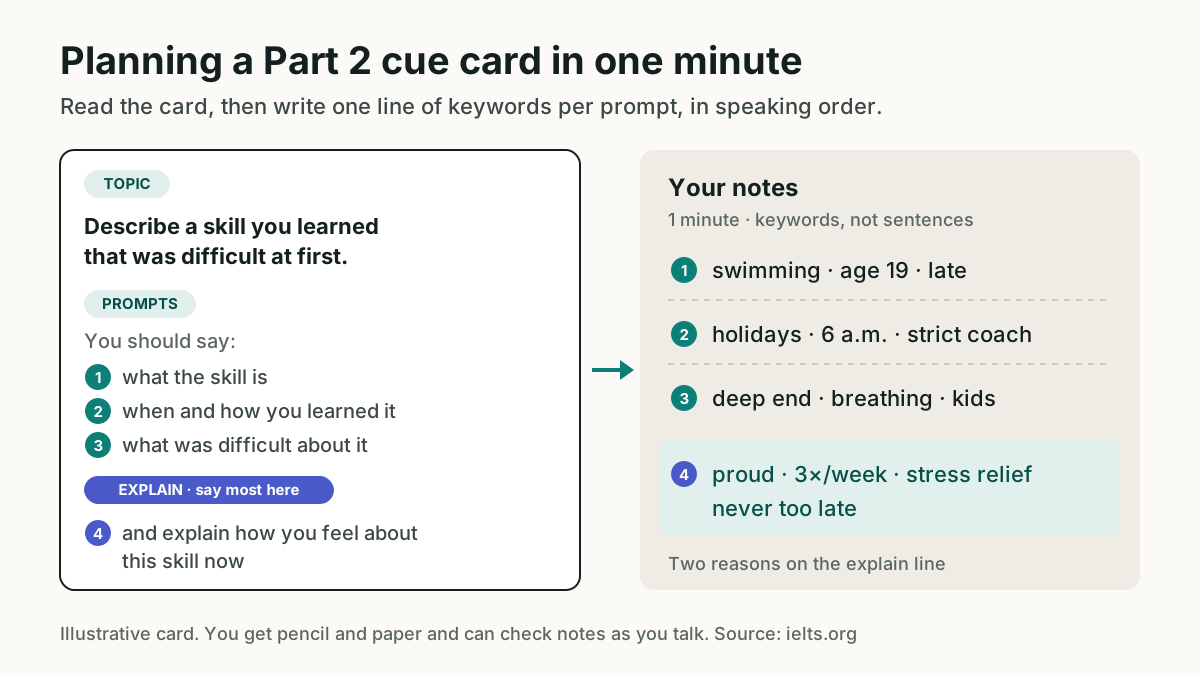
IELTS Speaking Part 2 cue cards: how to plan in one minute and speak for two
A note layout that fits in the one-minute preparation, a full worked cue card with a two-minute model answer, and what to do when you run dry.
· 9 min read
IELTS speaking
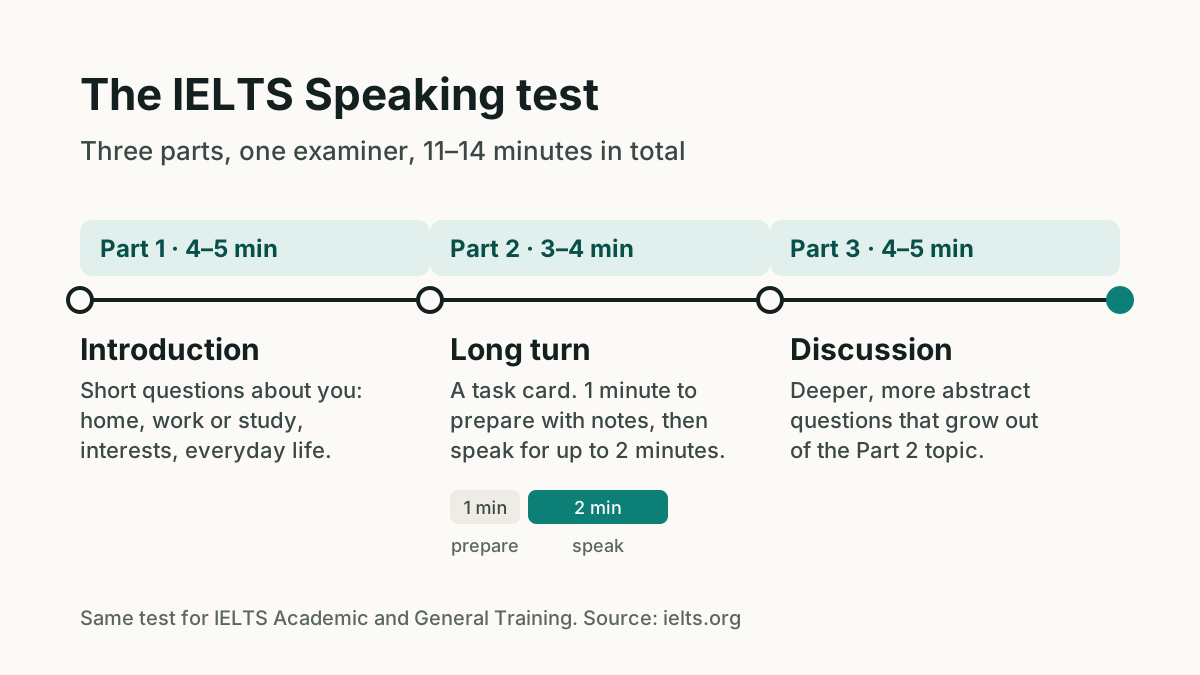
IELTS Speaking test format: Parts 1, 2 and 3 explained
Eleven to fourteen minutes, three parts, one examiner. What happens in each part, how long you speak, and what to practise for each.
· 6 min read
Grammar
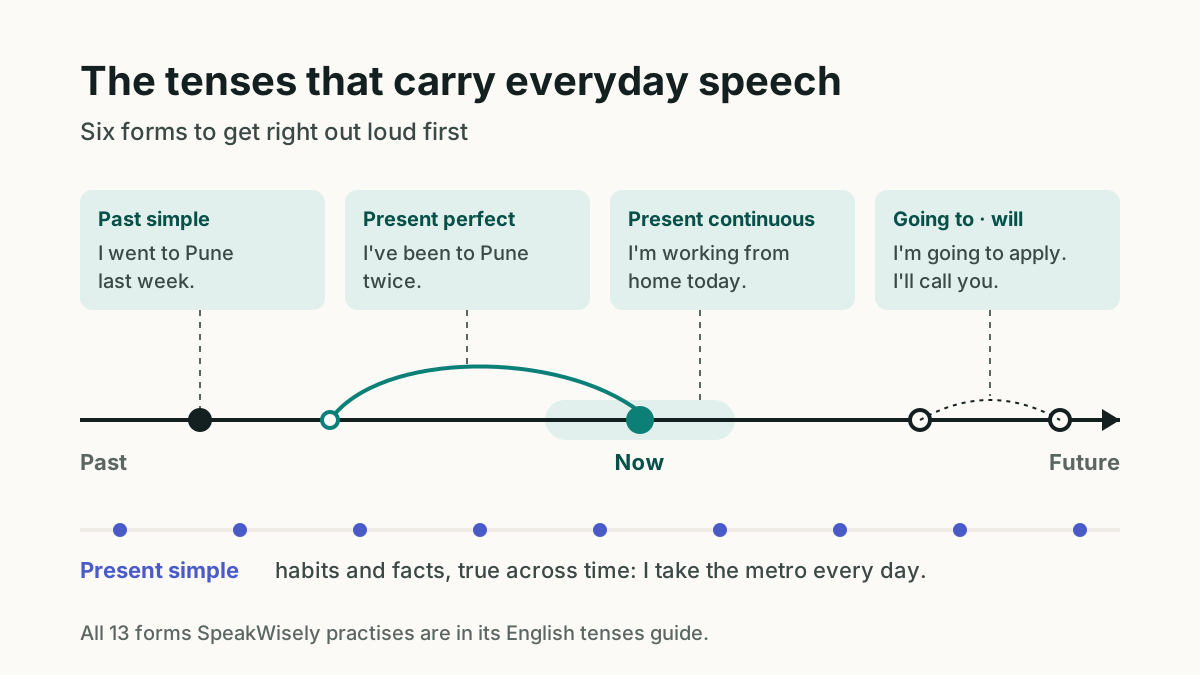
The English tenses you actually need for speaking
Six forms carry everyday conversation. Which ones they are, the mix-ups that give learners away, and how to practise them out loud.
· 7 min read